
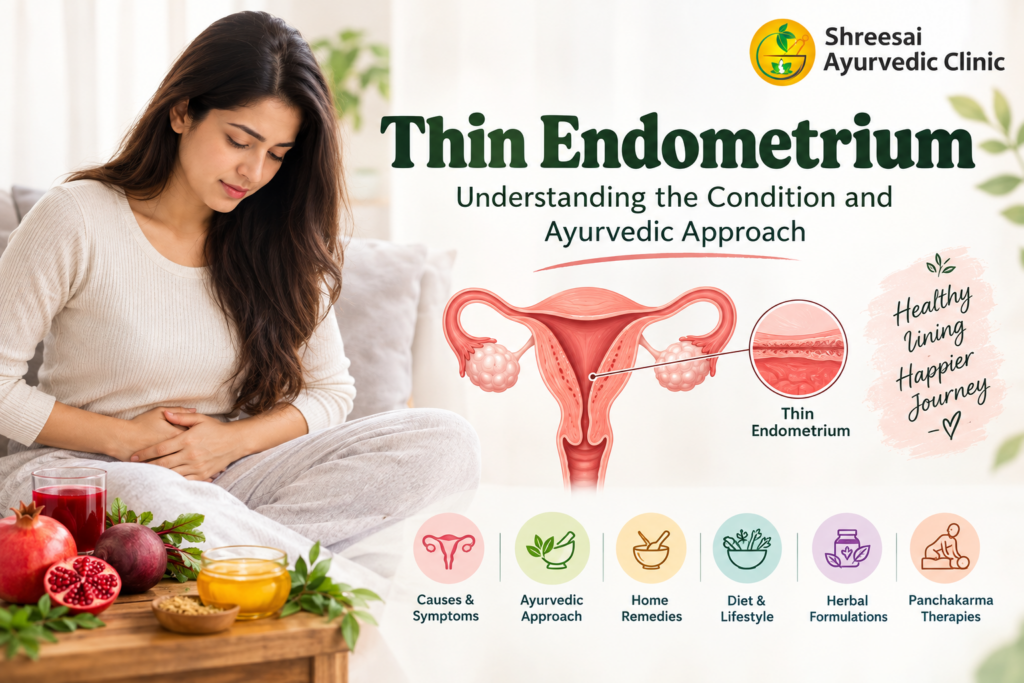
Thin Endometrium: Understanding the Condition and Ayurvedic Approach
Thin Endometrium: Understanding the Condition and Ayurvedic Approach Understanding Thin Endometrium In thinning let us understand what goes wrong, and how Ayurveda approaches it step-by-step. Endometrium is the lining the inside of your womb. Every month, this wallpaper needs to grow thick, plush, and filled with blood vessels so a fertilized egg can securely attach and grow. If the lining measures less than 7 mm on an ultrasound, it is considered too thin, making it difficult for an embryo to stick. Causes & Symptoms of Thin Endometrium Causes A thin lining is most commonly caused by poor blood circulation to the pelvis, low estrogen levels, or past uterine infections. It can also happen if the lining was damaged during a past surgery (like a D&C or abortion) leaving behind microscopic scar tissue. Paradoxically, taking the common fertility drug Clomiphene Citrate for too many cycles can also cause the lining to thin. Symptoms A thin endometrium has no obvious physical symptoms. You will not feel pain or discomfort. The only common clue is having very light, brief, or spotty periods. Most women only find out they have it during a routine fertility ultrasound. Correlation with Ayurveda In Ayurveda, a thin endometrium is known as a state of Anavasthita (instability) and Kshaya (tissue depletion) within the Artava Vaha Srotas (the reproductive channels). Dosha & Tissue Involvement It is a classic Vata disorder accompanied by a lack of healthy Pitta (warming blood flow). The Ayurvedic Process When Vata (which brings dryness and coldness) increases in the pelvic area, it physically constricts the tiny blood vessels supplying the womb. Because of this constriction, Rasa Dhatu (your body’s primary nutrient fluid) and Rakta Dhatu (blood) cannot reach the uterus in adequate amounts. Without these rich, juicy fluids, the uterine tissue simply cannot grow, leaving the lining dry, shallow, and cold. Home Remedies for Thin Endometrium 1. The Pomegranate and Beetroot Flush Recipe: Juice 1 cup of fresh red pomegranate seeds and half a fresh beetroot. Do not add ice or refined white sugar. How to use: Drink this fresh juice regular. Both ingredients are rich in natural nitrates that help expand the blood vessels in your pelvis, forcing a rush of rich, oxygenated blood straight into the uterine lining. 2. Medicated Phala Ghrita Ghee Recipe: Purchase authentic Phala Ghrita – Mix 1 teaspoon of warm, liquid Phala Ghrita into a cup of warm organic cow’s milk. Drink this on an empty stomach every morning. Healthy fats act as natural building blocks for your hormones and provide the “moisture” needed to counter Vata’s dryness. Ahar & Vihar (Diet & Lifestyle Guidelines) 1. Ahar (What to Eat vs. What to Avoid) Strictly Avoid: Raw salads, iced drinks, cold juices, smoothies, crackers, chips, and excess caffeine. Cold and dry foods cause immediate constriction of your pelvic blood vessels, starving the lining of nutrients. Actively Include: Warm, freshly cooked, moist, and easily digestible foods. Eat beetroot soup, warm khichdi with plenty of ghee, sweet potatoes, pumpkins, dates, almonds, and soaked figs. Use warming, circulation boosting spices like fresh ginger, cumin, fennel, and a small pinch of cinnamon in your daily cooking. 2. Vihar (Daily Routine & Exercise) Legs-Up-The-Wall Pose (Viparita Karani): Lie on your back with your legs resting straight up against a wall, keeping your hips as close to the wall as comfortable. Hold this pose for 10–15 minutes every night before bed. This gently reverses gravity, pooling nutrient-rich blood out of your legs and directly into your uterus. Keep Your Feet and Belly Warm: Avoid walking barefoot on cold tile or stone floors. Keep your feet covered with warm socks and ensure your lower abdomen stays warm. Ayurvedic Kalpa (Formulations) Sukumar Ghritham / Kashayam A highly celebrated classical formulation designed specifically to improve the thickness, quality, and blood supply of the uterine wall. Shatavari Churna A premier female rejuvenator (Rasayana) that helps mimic natural estrogenic support, plumping up the endometrial tissue cells. Panchakarma (Deep Purification) To structurally build up a thin lining, two specific therapies are highly effective: 1. Matra Basti (Medicated Oil Enemas) Warm, healing oils (like Dhanwantaram Taila) are introduced into the lower tract. Because colon sits directly next to the uterus, these nourishing oils are absorbed rapidly, deeply moisturizing the pelvic tissue and soothing Vata dryness. 2. Uttara Basti (Direct Intrauterine Priming) This is the ultimate Ayurvedic therapy for a thin endometrium. A specialized physician introduces a tiny, sterile drop of medicated ghee directly into the uterine cavity right after your period ends. Clinical studies show this direct application dramatically improves lining thickness and helps create a healthy, receptive, three-layered (trilaminar) appearance on an ultrasound.